

In August of 2025, the U.S. Department of Agriculture (U.S.D.A) and the Forest Service published a Notice of Intent (2025 NOI) in the Federal Register to put together an Environmental Impact Statement supporting a proposal to rescind the 2001 Roadless Area Conservation Rule (The Roadless Rule). Then, last week, the Draft Environmental Impact Statement (2026 DEIS) was released alongside the proposed rule rescission (2026 Proposed Rule Rescission).
So, what does any of this mean?
Let’s start from the beginning. The Roadless Rule was put in place to protect a particular category of land within the National Forest System (NFS) known as “Inventoried Roadless Areas” (IRAs). Generally, an IRA can be understood to mean a large undeveloped area of National Forest Service land, typically 5,000 acres or more. IRAs account for approximately 58.2 million acres of land within the NFS (2025 NOI). “While they are referred to as ‘roadless’, because of the history of their inventory and designation, there are thousands of miles of existing roads within lands designated under the 2001 Roadless Rule… About half of these lands are within 1 mile of a road and 31 percent are within 0.5 miles of a road (13.3 million acres)” (2025 NOI).
The 2001 Roadless Rule In a Nutshell
§ 294.12. The 2001 Roadless Rule prohibits construction and reconstruction of roads in inventoried roadless areas unless the construction is necessary for public health and safety, such as access for wildfire management that requires intervention, necessary for natural resource restoration in accordance with existing legislation, when a road has become too hazardous, or under the discretion of the Secretary of Agriculture to be in public interest, among other exceptions. *** Maintenance of existing roads in IRAs is permitted***
§ 294.13 The 2001 Roadless Rule prohibits the commercial harvesting of timber in inventoried roadless areas unless cutting smaller diameter timber is necessary for maintaining or improving sensitive habitats, to reduce wildfire risk, and management activities, among other exceptions.
The Proposed Rescission
Because this is a rule, and not a law, The 2001 Roadless Rule has been rescinded and reinstated numerous times between 2001 and today. The current proposed change would vacate the prohibitions outlined above and allow for road development and timber harvest to resume in IRAs.
What Could this Mean for Your Community?
The 2001 Roadless Rule was intended to protect and preserve certain values of IRA lands including, but not limited to, “high quality soil, water, and air”, “sources of public drinking water”, recreation/ multiple uses of federal land, sensitive habitats, cultural and sacred sites, landscapes with scenic qualities, hunting, fishing, and more (2001 Roadless Rule Values). The proposed rescission of this rule has the potential to impact a wide range of communities with varying beliefs about how these lands should be managed. For the scope of this discussion, we will compare and contrast the information gathered in the 2000 and 2026 Environmental Impact Statements generated throughout the rule making process as well as supplemental studies conducted between 2000 and 2026 to analyze 5 major areas that might affect our respective communities: Drinking Water, Wildfire Management, Timber Industry & Forest Dependent Communities, Biodiversity, and Tribal Interests.
Drinking Water
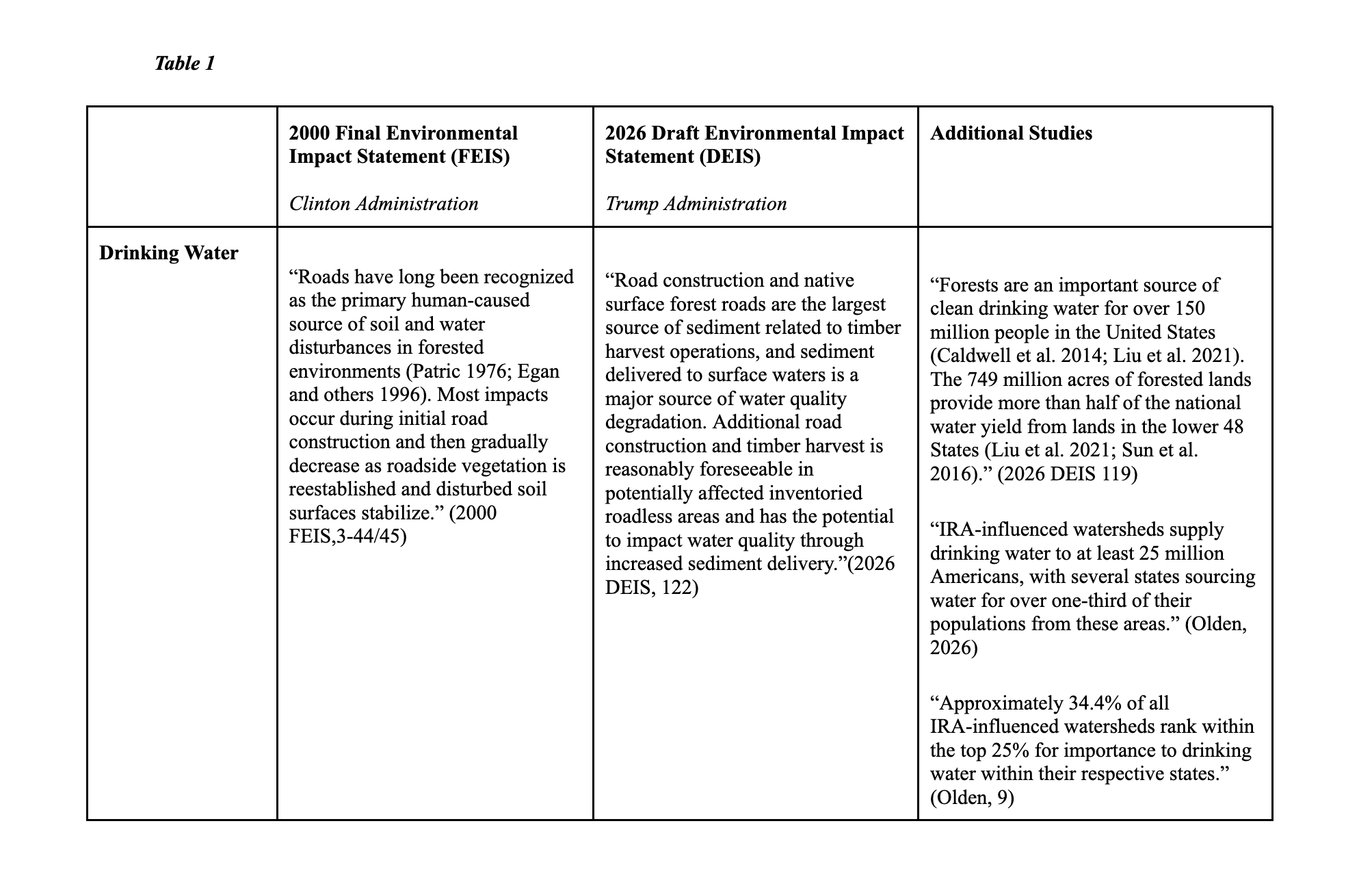
The first area of concern we will discuss relates to major water sources that are associated with Inventoried Roadless Areas. Both the 2000 Final Environmental Impact Statement (2000 FEIS) published during the Clinton Administration, and the 2026 Draft Environmental Impact Statement (2026 DEIS) published last week under the Trump Administration address concerns of the negative effects of road construction and timber harvest in and around watersheds. The two statements are consistent in the sense that they state road development is a major source of water quality degradation (See Table 1), with the major mechanism of degradation being sediment in surface waters in direct proximity to roads and areas downstream of said roads. Increased degradation of soil and water quality can also happen when roads are not properly maintenanced and begin to degrade, altering the quality of the surrounding soil and water. In 2001, the U.S.D.A. expressed financial concerns around the inability of the Forest Service to acquire proper funding to maintain the existing roads in these areas, stating that they received only 20% of the necessary maintenance funding and had an $8.4 billion backlog in 2001 (2001 Roadless Rule). In the 2026 DEIS, the U.S.D.A supplies similar numbers, stating that in 2024, the Forest Service still only receives 20% of the necessary funding to service existing roads (2026 DEIS, 42). As far as timber harvest is concerned, the possible mechanisms of water quality disturbances can originate from increased water temperature from removal of trees that previously provided shade and “increasing the release of certain nutrients from the decomposition of timber harvest byproducts” as well as “reduced nutrient uptake from harvested trees” (2026 DEIS, 117).
Wildfire Management
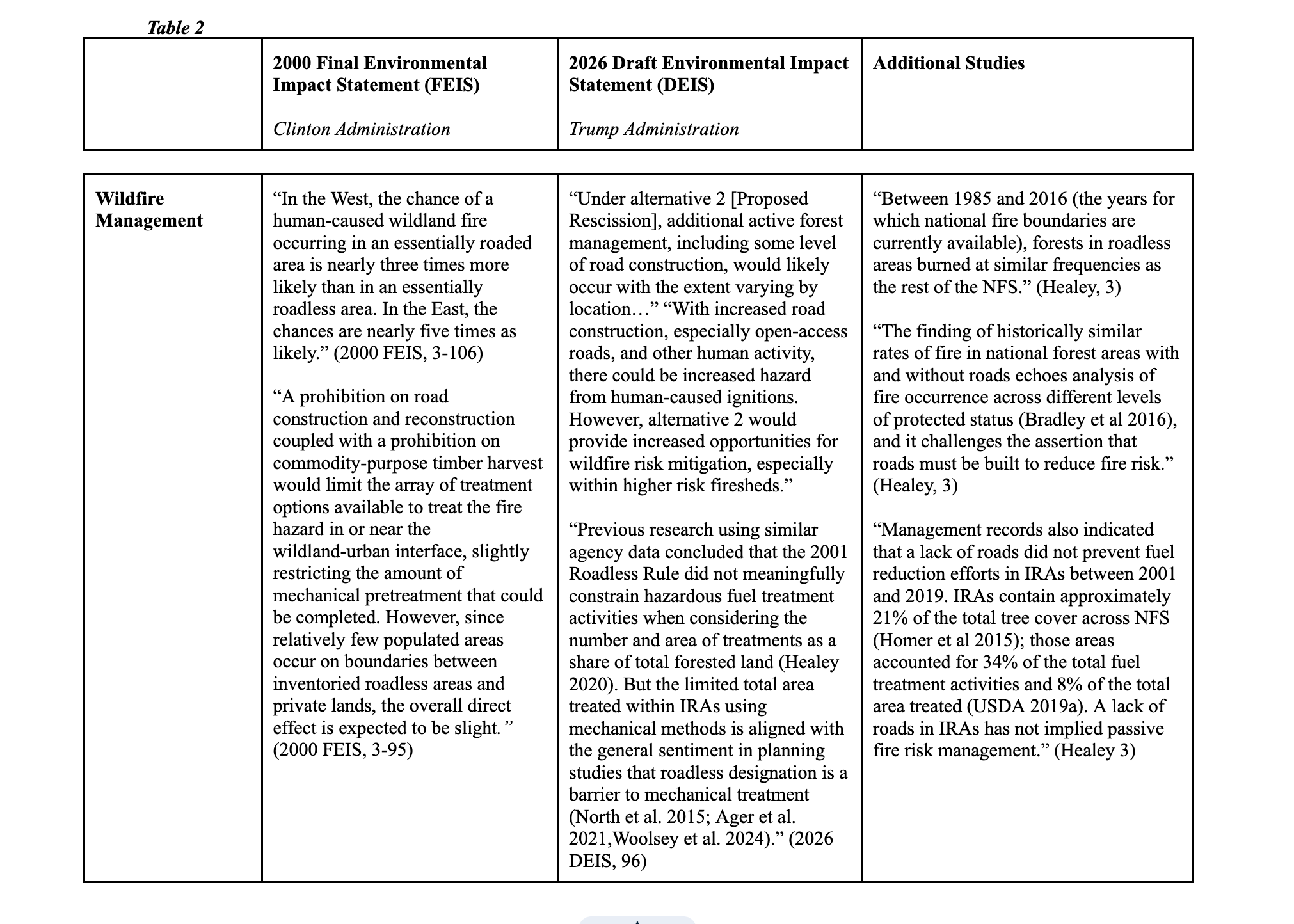
As far as wildfire management and public safety is concerned, the two impact statements are at odds. Essentially the question is this: could additional roads improve wildfire management by providing access for fuel treatments? Or could they simultaneously increase the risk of human-caused wildfire ignitions, which “increase in abundance in proximity to roads” (2026 DEIS, 90). The 2000 FEIS states that “the chance of a human-caused wildland fire occurring in an essentially roaded area is nearly three times more likely than in an essentially roadless area. In the East, the chances are nearly five times as likely” (2000 FEIS, 3-106). The development of roads in IRAs could increase access to otherwise remote forested areas, making it simpler to carry out mechanical fuel treatments such as removing, reducing, or relocating potential fuel. In this way, “roadless designation is a barrier to mechanical treatment” (2026 DEIS, 96). The 2026 DEIS also acknowledges that mechanical treatments are not the only way to mitigate wildfire risks. Other methods of wildfire risk management include managing unplanned ignitions and prescribed burns which allow for the achievement of land management objectives and fire risk prevention without the use of mechanical treatments (2026 DEIS, 95-97). Some additional studies indicate that the occurrences of wildfires in IRAs in comparison to other NFS lands are historically similar in frequency (See Table 2), which begs the question: will the addition of new roads increase fire risk by human ignition, or will it help mitigate fire risk with better access for mechanical fuel treatments?
Timber & Forest Dependent Communities
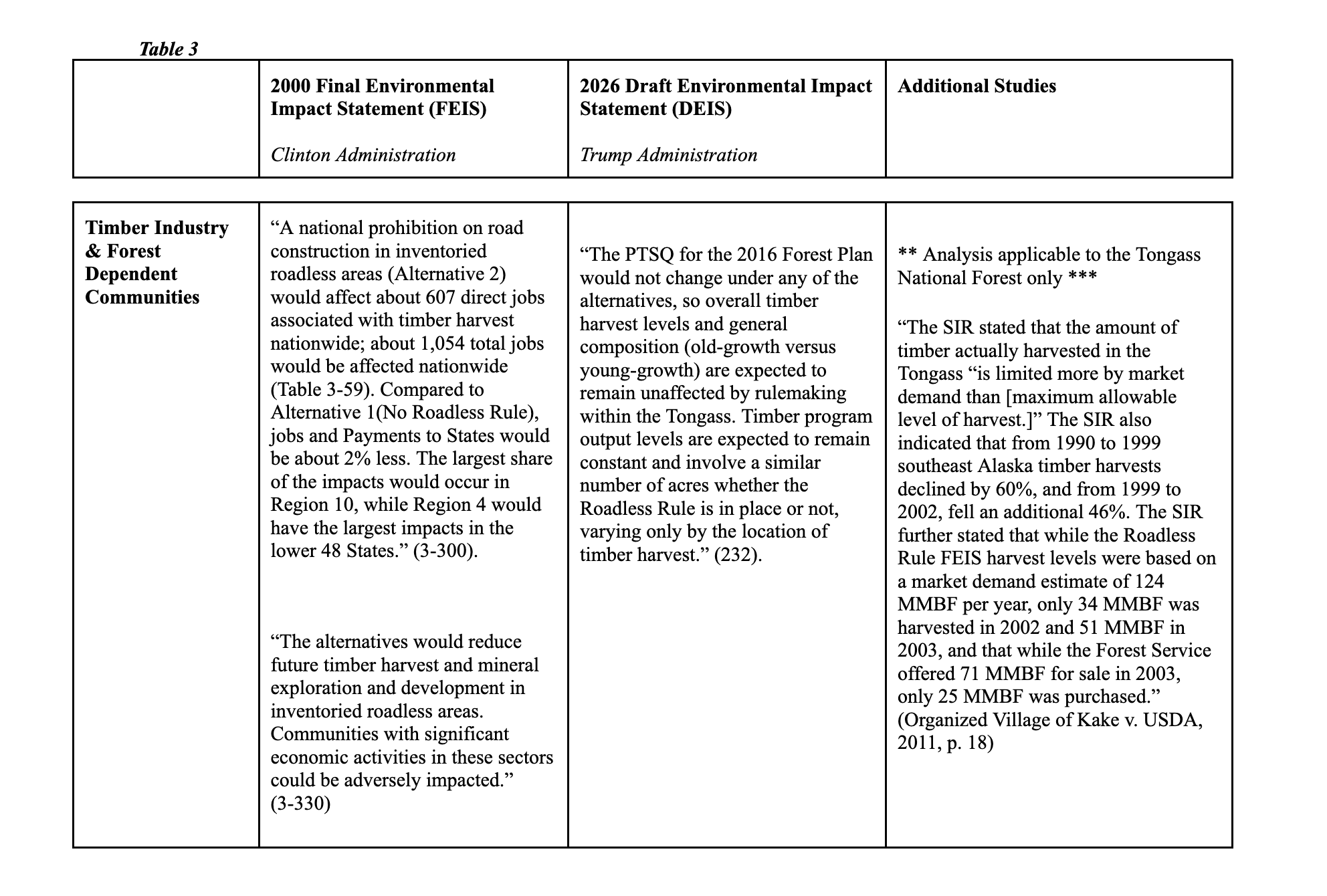
When the Roadless Rule was developed, one concern was how restricting commercial timber harvest could affect communities that depend on the timber industry. The 2000 FEIS estimated that the prohibition could affect approximately 1,054 total jobs nationwide (2000 FEIS, 3-300), acknowledging that there could be adverse effects to these communities with the implementation of the rule. One particular area of interest with regard to timber interests is Tongass National Forest in Alaska, the largest national forest in the United States. In 2003, the Tongass was temporarily exempted from the Roadless Rule, allowing for timber harvest in IRAs where it was previously prohibited. In a 2011 decision reviewing the Tongass’ exemption from the rule, a federal district Court examined a Forest Service Supplemental Information Report (SIR). The SIR found that timber harvest in the Tongass was declining primarily due to market demand rather than limitations on available harvest areas. Between 1990 and 2002, harvest had fallen sharply, and in 2003 the Forest Service offered 71 million board feet for sale but the industry purchased only 25 million. The court’s discussion of the SIR therefore provides evidence that market demand was a significant constraint on timber harvest, independent of the Roadless Rule (Kake v. USDA, 2011, p. 18). After a long legal battle, the Ninth Circuit ultimately affirmed the district court’s decision, reinstating the 2001 Roadless Rule and its application to the Tongass (Kake v. USDA, 2015, p. 3). Finally, the 2026 DEIS indicates that under current agency direction, the timber industry is set to increase its volume output by 25 percent, even if the 2001 Roadless Rule were to remain in place. If the Roadless Rule were to be rescinded, it estimates that timber output would remain at similar levels and would just vary by location of timber harvest (2026 DEIS, 232).
Biodiversity
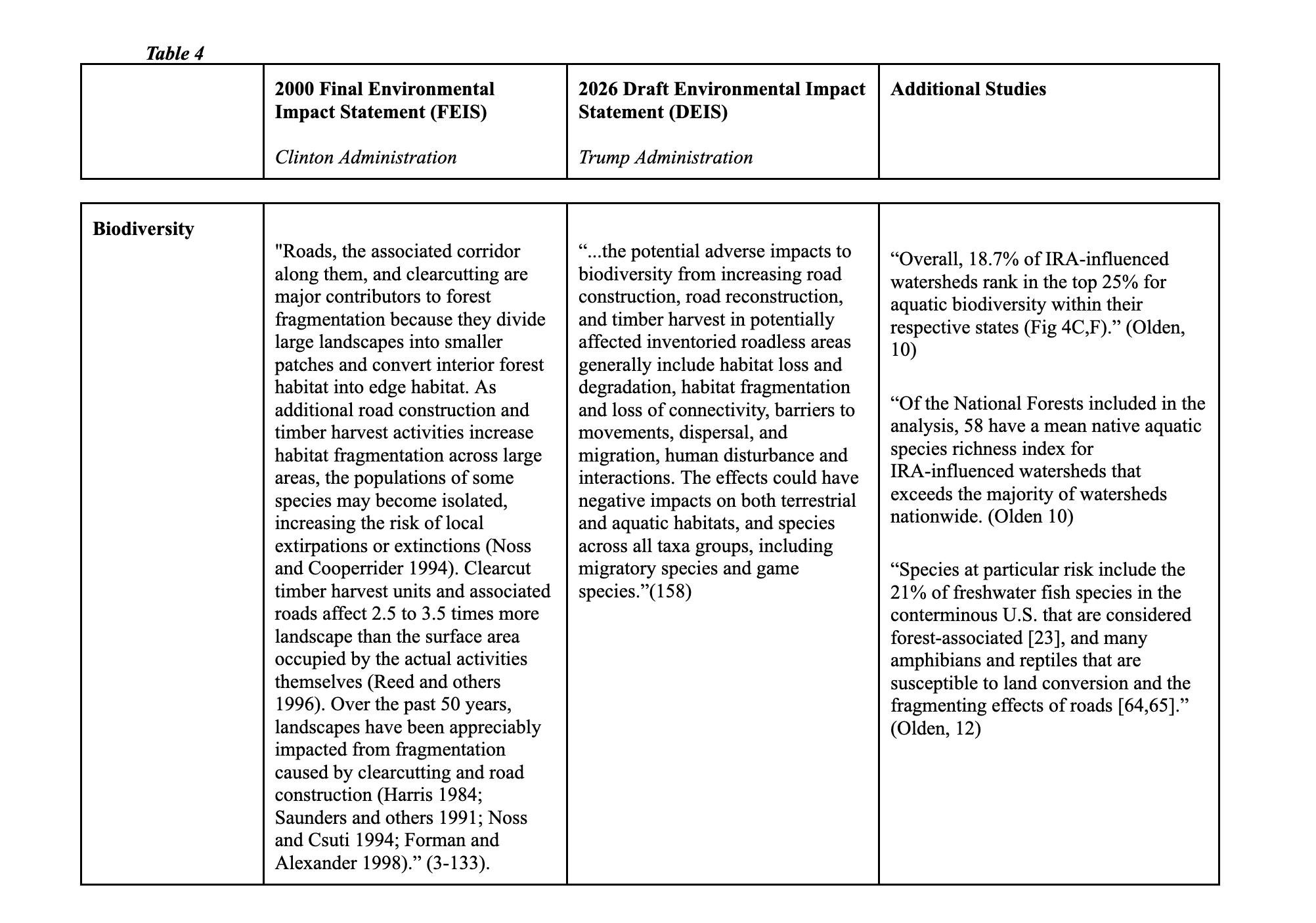
While the impacts of road development and timber harvesting are numerous and complex, for the scope of this article we will focus on the idea of habitat fragmentation. Habitat fragmentation is exactly what it sounds like: taking large contiguous areas of land and breaking them up into smaller, fragmented pieces that are separated by elements like roads and developed areas. Fragmentation of ecosystems can lead to what scientists call an “edge effect.” This happens when road development or forest clearing turns what was once interior forest into exposed forest edge. As fragmentation increases, adverse edge effects also increase, including changes in sunlight, temperature and wind exposure, increase in human-caused fires, and the invasion of nonnative species (2000 FEIS, 3-128). “Clearcut timber harvest units and associated roads affect 2.5 to 3.5 times more landscape than the surface area occupied by the actual activities themselves” (2000 FEIS, 3-133). The effects of fragmentation, whether adverse or advantageous, vary by species. Some game species find edge habitat ideal, and other species who require larger areas of contiguous forest experience negative impacts from fragmentation. Both the 2000 FEIS and the 2026 DEIS acknowledge that road development and timber harvesting can alter these habitats, with impacts varying by species. Biodiversity is a central component of the ecosystems that provide resources people depend on, including fish and game species. There are additional studies (See Table 4) that quantify how the rescission of this rule could alter aquatic species and potentially affect fishing in these affected areas.
Tribal Interests
The final consideration we will look at is the interests of indigenous and tribal communities. For context, there are 558 tribes recognized by the United States government that own approximately 4.2% of the land in the U.S. (2000 FEIS, 3-352 - 3-354). The relationship between the U.S. government and these Tribes can be characterized as a nation-to-nation relationship, meaning these tribal communities have certain sovereign rights not held by the American public. What was once an ungoverned subsistence lifestyle, became legal language in treaties allowing indigenous access to U.S. federal lands. “These uses and rights to take natural resources were to be exercised outside the boundaries of their respective Indian reservation. These are known as treaty-reserved off-reservation rights” (2000 FEIS, 3-353). Some of these rights include gathering, grazing, hunting, fishing, and harvest rights in IRAs and NFS lands. Both the 2000 FEIS and the 2026 DEIS acknowledged a variety of tribal concerns ranging from the issue of degradation of the quality of the land as well as the issue of lack of access to forested areas without roads (2000 FEIS, 3-354). In the Federal Roadless Rulemaking Subsistence Hearings in 2019, testimony was taken from 18 communities in Southeast Alaska (Tongass region) to gain more insight into local indigenous attitudes. While specific preferences with regard to rule alternatives were not always stated, the overwhelming majority opposed a full exemption. What was evident in between the lines of these testimonies was an overarching theme that these indigenous communities wanted local control over environmental decisions that affect their everyday lives. Their needs are not satisfactorily met within the provisions of the 2001 Roadless Rule nor in the full Tongass exemption alternative (Wilmer, 1000-1007). The complexity of the sovereignty of indigenous Tribes and their interactions with the U.S. rulemaking process leads to local interests being obscured by summarization on a national scale in a way that is unable to accurately describe their interests. Both the 2000 FEIS and the 2026 DEIS address the existence of conflicting interests and overall complexity of Tribal relations with the U.S government.
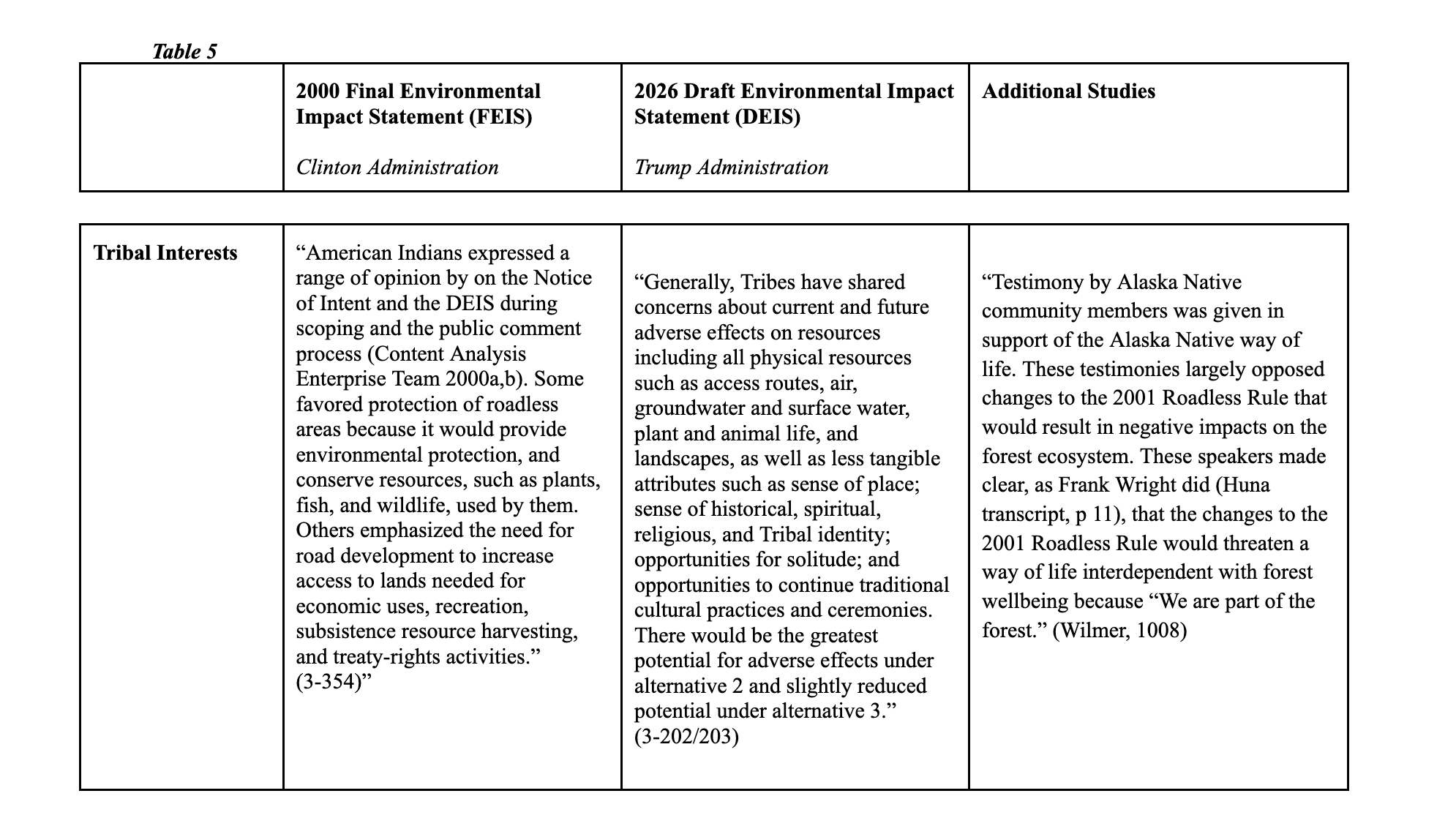
What Comes Next?
We know that the rescission of the 2001 Roadless Rule could impact our water, wildfire risks, the timber industry, biodiversity, and indigenous interests: all issues that affect different communities in different ways. So the question that remains is this: which of these issues matter to you?
File your public comment at the link below and ask the federal government if this rule change will take into consideration the needs of your community. The official comment period ends on September 21, 2026.
Click here to file a public comment.
Sources
U.S.D.A. “USDA Acts to Remove Roadless Rule Restrictions to Exacerbate Rising Wildfire Risk.” August 18, 2026.
U.S.D.A. Forest Service: Roadless Areas “What’s New”
Federal Register. NOI “Special Areas; Roadless Area Conservation; National Forest System Lands”. August 29, 2025.
U.S.D.A. Forest Service Roadless Area Conservation “Final Environmental Impact Statement: Volume 1” November, 2000.
U.S.D.A. Forest Service Roadless Area Conservation “Draft Environmental Impact Statement – Roadless Rule Recission: Volume 1” August 19, 2026.
Federal Register “Special Areas; Roadless Area Conservation; National Forest System Lands.” August 18, 2026
Federal Register. “Special Areas; Roadless Area Conservation; National Forest System Lands.” January 12, 2001.
Olden (2026) “Assessing the value of the U.S. Roadless Rule for people and nature” July 2026.
Healey (2020) “Long-term forest health implications of roadlessness” 2020.
U.S. Government Accountability Office, Tongass National Forest: Forest Service’s Actions Related to Its Planned Timber Program Transition, GAO-16-456 (April 25, 2016).
USDA Forest Service, Rulemaking for Alaska Roadless Areas: Final Environmental Impact Statement (September 2020).
District Court, Organized Village of Kake v. U.S. Department of Agriculture, 776 F. Supp. 2d 960 (D. Alaska 2011).
9th Circuit of Appeals, Organized Village of Kake v. U.S. Department of Agriculture, 795 F.3d 956 (9th Cir. 2015) (en banc).
Hailey N. Wilmer et al., “Southeast Alaskans Want Food Sovereignty and Reimagined Rural Futures” Society & Natural Resources 37, no. 7 (2024): 1000–1016.
George A. Woolsey, et al., “Constraints on Mechanical Fuel Reduction Treatments in United States Forest Service Wildfire Crisis Strategy Priority Landscapes” Journal of Forestry 122, no. 4 (2024)